The mental model most people carry is that the sun is a lamp overhead, and that anything between you and it is protection. That model works reasonably well in a garden and fails badly on water, on snow and on a bright beach.
Ultraviolet arriving at your skin has three components. There is the direct beam from the sun. There is diffuse ultraviolet scattered by the atmosphere, which arrives from the whole sky and is the reason shade is not darkness. And there is ultraviolet reflected from the surfaces around you, which arrives from the sides and from below.
Which surfaces reflect
The World Health Organization's public material on ultraviolet describes the reflective properties of common surfaces. Fresh snow is described as by far the strongest reflector of those commonly encountered. Sea foam reflects considerably more than open water. Dry beach sand reflects meaningfully. Water reflects a modest but real proportion, varying strongly with the angle of the sun and the state of the surface. Grass, soil and most built surfaces reflect comparatively little.
We are deliberately not restating the individual percentages here, because we would be repeating figures from memory and this publication does not do that. The World Health Organization's ultraviolet material is the source, and it is worth reading directly. The ranking, however, is stable and is all you need for a decision: snow, then foam, then sand, then water, then everything else.
The body sites that reflection reaches
This is where reflection stops being a physics curiosity and becomes a practical problem. Reflected ultraviolet reaches skin that faces downwards or sideways, which is exactly the skin nobody protects.
- The underside of the chin and jaw. The classic sailing, paddling and skiing burn.
- The underside of the nose and the nostrils. Characteristic of snow.
- The eyelids and the skin under the eyes. Which is why eyewear matters on snow and water. See eyes and lips.
- The insides of the upper arms and forearms. Reached on the recovery phase of a paddle stroke.
- Behind the ears and under the earlobes.
- The backs of the legs when standing on bright sand.
None of these are places people think about, and all of them are places people burn in the specific environments where reflection is strong. Our conditions files on ski touring, sailing and paddlesports each set out the local version.
Why shade is not shelter
Shade
What it certifies
Genuinely useful. Shade removes the direct beam, which is the largest single component of ultraviolet exposure, and seeking shade in the middle of the day is among the most effective protective actions available. Public guidance in the UK and internationally puts it near the top of the list for good reason.
What it does not
It does not remove ultraviolet entirely. Scattered ultraviolet from the sky and ultraviolet reflected from surrounding surfaces both reach you in shade, which is why people burn under parasols on bright beaches and in the shadow of a boat sail. Shade reduces the dose; it does not eliminate it.
Two effects erode shade. The first is diffuse sky ultraviolet, which arrives from the whole hemisphere rather than from the sun's position, so an object that blocks the sun does not block the sky. The second is reflection from the ground and surroundings. On a bright beach both are significant, which is why people burn under parasols and are surprised.
The lesson is not that shade is useless. Shade removes the direct beam, which is the largest component, and seeking it in the middle of the day is among the most effective things anyone can do. The lesson is that shade is a reduction, not an exemption, and that on a highly reflective surface the reduction is smaller than it feels.
Overhead sun collapses shade
There is a second, geometric problem, most acute at low latitudes. When the sun is close to overhead, an object throws a small shadow directly beneath it, so a parasol shades a much smaller area than the same parasol in a British late afternoon. Our conditions file on tropical travel deals with this.
Snow is the special case
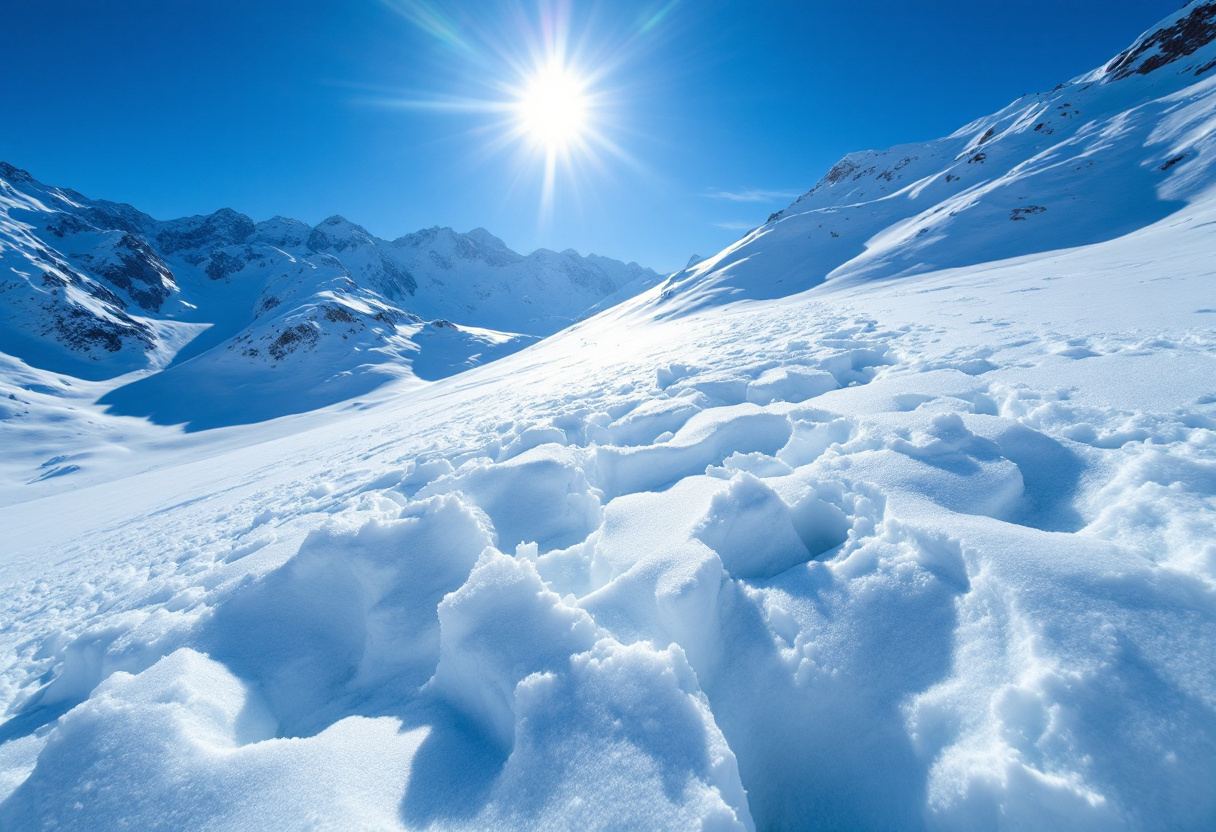
Snow deserves separate treatment because the reflection is strong enough to change the whole exposure. On a bright snowfield, a person is effectively lit from below as well as above, and the sites that suffer are the ones with no habit of protection at all. Add altitude, which raises the incoming ultraviolet in the first place, and add cold, which removes any sensory warning, and you have the hardest environment described anywhere on this site. Our file on ski touring and snow covers it in full.
What to do about it
- Apply to the undersides. Under the chin, under the nose, the inside of the arms. It feels absurd until the first time you burn there.
- Wear eyewear on water and snow, from the start of the day rather than when it feels bright.
- Treat shade on a reflective surface as partial. Under a parasol on white sand you are still receiving ultraviolet.
- Prefer a brim to a peak. A brim shades from more directions.
- Do not treat a beach stop as a rest, on a paddle or a surf. It is exposure with added reflection.
Pale decks, white walls and the built environment
Reflection is usually discussed in terms of natural surfaces, but a large amount of outdoor life happens on pale artificial ones. A white boat deck, a light coloured patio, a concrete pontoon, a painted wall and a pale poolside all reflect more than grass or soil.
The effect is smaller than snow and generally smaller than dry sand, but it is not nothing, and it accumulates over the hours people spend on exactly those surfaces. A day spent working on a white deck, or sitting beside a pale pool surround, delivers reflected ultraviolet to the same shaded undersides that water and snow reach.
The practical version is simple: the brighter the ground around you looks, the more of your dose is arriving from directions you are not protecting. Bright ground is a cue worth learning to notice, in the same way that wind is a cue that your thermal warning system has been disabled.
Where reflection and altitude compound
The two effects described on this site as multipliers, altitude and reflection, are at their most significant when they occur together, which is to say on snow in mountains. Altitude raises what arrives from the sky, and snow returns a large share of it from the ground. Neither is dramatic alone at British elevations. Together, at alpine altitudes on a clear spring day, they produce the hardest environment described anywhere in this guide, which is why our ski touring file treats reapplication as non optional rather than as good practice.
What is not verifiable
We do not publish reflectance figures of our own, and we do not restate specific percentages from memory. We cannot tell you what proportion of your dose on a particular day arrived from below, because that depends on the surface state, the sun angle and your posture. What is stable and useful is the ranking of surfaces and the list of body sites affected, and those are enough to change what you do.
The one line version
Ultraviolet comes from the whole sky and bounces off the ground. Protect the undersides, wear the glasses, and treat shade on snow, sand or water as a discount rather than a wall.